

LG30NC Glass-Fiber-Reinforced LCP for Precision Robot Parts
July 25, 2026LG30NC is a 30% glass-fiber-reinforced liquid crystal polymer (LCP) that we develop and produce. It is a mature modified product developed for the robotics industry, where parts must be precise and lightweight and must withstand high-frequency motion and long service at high temperature. Its performance can fully replace imported material.
With very low moisture absorption, low warpage, high heat resistance, high insulation, a low dielectric constant and creep resistance, it suits industrial robots, collaborative robots, humanoid robots and automated manipulators, for key parts in joints, transmissions, electrical controls, sensing and end effectors. It is an important material for replacing steel and high-temperature nylon with plastic in robots.
In robot design, LG30NC mainly replaces conventional glass-fiber PPS, PA46 and PA6T/PA9T high-temperature nylons, and some small metal structural parts. It is especially suited to precision parts that need accuracy, heat resistance, insulation, light weight and long-term stability.
1. Measured properties of LG30NC
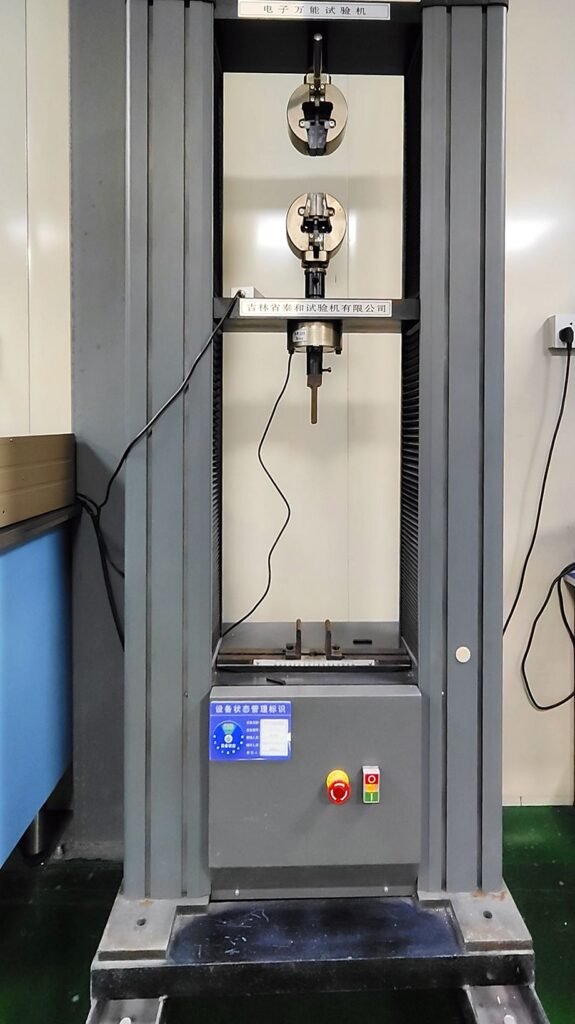
All values were tested to the standards listed below. Performance is stable and controlled, and the data can be used as a reference for part design and material selection.
2. Why LG30NC suits robots
-
High heat resistance without deformation: rated to 265.8 °C, it withstands continuous motor heat and heat build-up inside enclosed robot bodies, and does not soften or warp at high temperature over long periods.
-
High stiffness and creep resistance: a modulus above 10500 MPa keeps parts from deforming or shifting under high-frequency swinging and loaded operation, protecting repeat positioning accuracy.
-
Very low moisture absorption for dimensional stability: humidity and temperature changes do not affect it, which prevents sticking and accuracy drift in robot parts.
-
High flow for thin walls: it moulds ultra-thin precision structures of 0.2-0.5 mm reliably, in line with the trend toward smaller, lighter robots.
-
V-0 flame retardancy and high insulation: inherently flame retardant with excellent insulation, it meets the electrical safety requirements of high-power robot controls.
3. LG30NC compared with common robot materials
-
Compared with reinforced PPS: PPS creeps at high temperature, tends to warp in long-term motion and is brittle in thin walls. LG30NC is better in flow, dimensional stability and fatigue resistance, and better suited to high-frequency precision moving parts.
-
Compared with PA46 high-temperature nylon: PA46 absorbs a lot of moisture and deforms easily with changes in temperature and humidity. LG30NC has low moisture uptake, resists hydrolysis and loses less performance with heat, so it holds its accuracy longer.
-
Compared with PA6T/PA9T high-temperature nylons: these age, hydrolyse and become brittle in enclosed high-temperature conditions. LG30NC has higher heat resistance, less exudation and a longer life, for long-cycle operation of high-end robots.
4. Robot parts made with LG30NC
LG30NC is already used across core parts of industrial robots, collaborative robots, humanoid robots and automated manipulators. It is currently the main replacement material for precision structures, transmissions, electrical controls, sensing and lightweight redesign in robots.
-
Joint system parts (joint insulating brackets, joint end caps, servo joint bases, joint cushioning supports, internal isolation structures): joints see the highest-frequency swinging, continuous heat and high loads. High stiffness and creep resistance mean no loosening or plastic deformation under long-term rotation; heat resistance withstands continuous servo heat build-up and prevents softening failure; stable dimensions keep multi-axis joint motion smooth and accurately positioned, greatly reducing noise, sticking and failures.
-
Servo motor insulating precision parts (motor insulating liners, stator support bases, terminal blocks, motor end-cap isolation structures): servo motors run hot with strong electromagnetic interference. High insulation, a low dielectric constant and heat resistance isolate interference and keep servo control precise; no ageing or volatiles over long high-temperature service keeps the robot power system stable.
-
Precision transmission parts such as gears, sliders and cages (micro transmission gears, bearing cages, precision sliders, gearbox clips, transmission locating structures): ordinary plastic gears wear, stick and have short lives. Glass-fiber-reinforced LG30NC resists wear and fatigue, keeps transmission clearance stable under frequent starts and stops without shifting or deviation, and its light weight lowers moving loads, noticeably improving response speed and repeat positioning accuracy.
-
Precision sensor mounting bases (bases and protective brackets for vision, torque, distance and tactile sensors): sensors are very sensitive to flatness and parallelism, and small deformation causes measurement errors. Low thermal expansion and no moisture-driven deformation keep bases flat and accurate despite ambient temperature changes and body heat, so recognition, obstacle avoidance, torque sensing and gripping stay accurate.
-
Precision electrical-control insulating parts (control insulating brackets, harness holders, circuit-board isolators, power-module insulating supports): robot bodies are dense with electrics and conditions are complex. Inherent V-0 flame retardancy, high insulation and heat resistance mean no ageing or conduction in enclosed high-temperature spaces, preventing short circuits and leakage at the source and raising the electrical safety of the whole machine.
-
End effector and dexterous hand parts (gripper insulating bushings, end support bases, suction module holders, micro locating structures, small dexterous-hand joint parts): end effectors open and close at high frequency under repeated loads. High strength and fatigue resistance prevent deformation and loosening over long operation; the light weight greatly reduces end load, improving gripping speed, working accuracy and battery life.
-
Lightweight structural parts for humanoid robots (torso supports, limb connection bases, lightweight auxiliary body structures, sensor brackets): humanoid robots need very light weight and long battery life. LG30NC replaces steel with plastic, greatly reducing weight and energy use, and its high stiffness withstands the repeated fatigue stress of walking and swinging for stable all-day operation.
As industrial, collaborative and humanoid robots move toward higher precision, higher stability, lighter weight and longer life, conventional high-temperature nylons and PPS can no longer meet high-end operating conditions. Our LG30NC glass-fiber-reinforced LCP combines heat resistance, stiffness, low warpage, low moisture absorption, insulation and flame retardancy, covers the core parts of robot joints, servos, transmissions, sensing, electrical controls, end effectors and humanoid lightweight structures, and is a stable, mass-produced material solution for high-end precision robots.
Contact us to discuss material selection, sample trials, volume supply and processing support.