


Reinforced Flame-Retardant PPS: High Flow, Heat Resistance and Strength for Automotive Electronics and Precision Industrial Parts
August 29, 20261. About Modified PPS
PPS (polyphenylene sulfide) is a high-performance engineering plastic widely used in industry. It offers heat resistance, chemical resistance, low water absorption, inherent flame retardancy and good dimensional stability, and is primarily used for structural parts operating under demanding conditions. It can commonly replace general engineering plastics such as PA66 and PBT in applications requiring lighter parts with heat and corrosion resistance.
Our natural-color modified PPS is a 40% glass-fiber-reinforced, flame-retardant grade. The formulation has been optimized to address common limitations of PPS with high glass-fiber loading, including low flow, injection molding difficulties and brittleness, combining the strength of glass-fiber reinforcement with good processability. It is suitable for components in new energy applications and automotive electronics, as well as precision industrial structural parts and thin-wall parts.
2. Measured Properties (All Values from Test Reports)
-
Density — 1.643 g/cm³: lower density than metal supports lightweight part design, reducing part weight and material cost while maintaining the mechanical performance of structural parts.
-
Melt flow rate — 81.0 g/10 min (the main processing advantage): PPS with high glass-fiber loading typically has limited flow, which can lead to short shots, surface fiber exposure and extended molding cycles in thin-wall and complex parts. With a melt flow rate of 81.0 g/10 min, this grade offers good flow for a 40% glass-fiber-reinforced material, fills thin-wall and complex geometries more smoothly, improves part appearance and maintains stable production cycles.
-
Tensile strength — 175.0 MPa: stable load-bearing performance helps parts maintain structural integrity under continuous vibration and normal loads, with resistance to cracking. This makes the material suitable for load-bearing structural parts.
-
Elongation at break — 5.20 %: reduced brittleness in materials with high glass-fiber loading provides a margin of tolerance during assembly and under minor impacts, lowering the risk of edge chipping and cracking in precision parts.
-
Flexural strength — 231.0 MPa; flexural modulus — 11840.0 MPa: good stiffness and creep resistance help parts resist permanent deformation and maintain their dimensions under long-term static and dynamic loads, making the material suitable for fixed support structures.
-
Charpy notched impact strength — 10.20 kJ/m²; Charpy unnotched impact strength — 38.50 kJ/m²: a balanced combination of stiffness and toughness reduces the brittleness and cracking at sharp corners often associated with plastics with high glass-fiber loading, making the material suitable for complex molded parts and parts with irregular geometries.
-
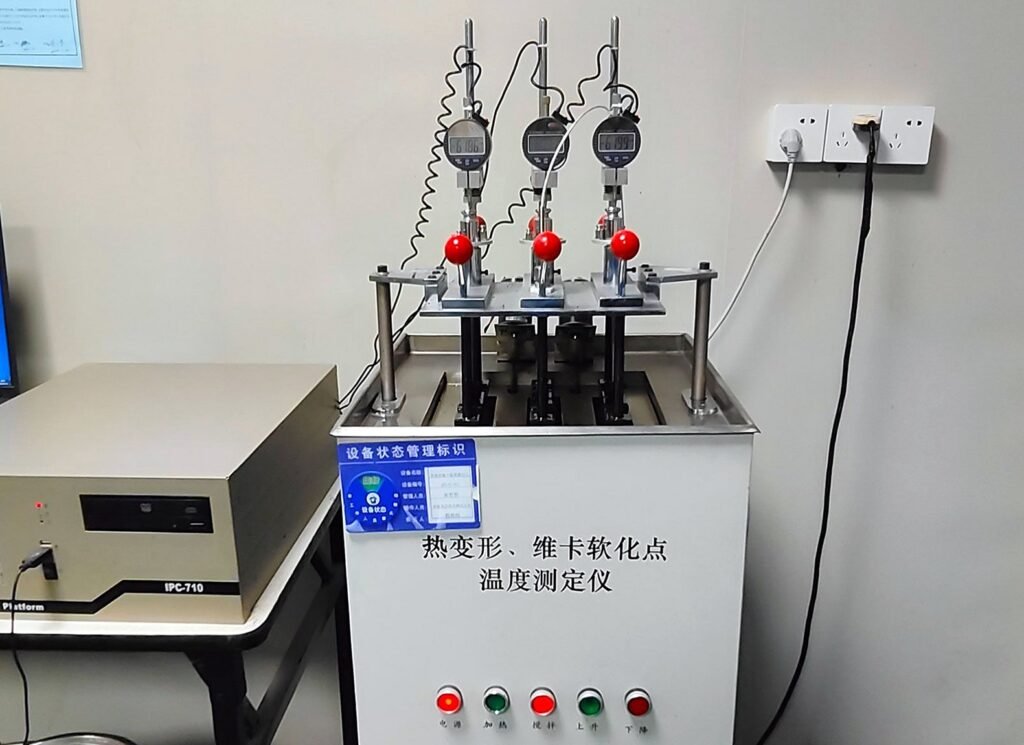
Heat deflection temperature — 260 °C at 1.8 MPa; long-term continuous service temperature — 200-220 °C: the material offers greater high-temperature stability than common glass-fiber-reinforced PA66 and PBT grades. Parts resist softening and deformation under load at elevated temperatures, making it suitable for automotive thermal management, under-the-hood applications and high-temperature pumps and valves.
-
Flammability — UL 94 V-0: the inherent flame retardancy of PPS means that high loadings of flame-retardant additives are not required, helping preserve mechanical properties. The material is self-extinguishing, with no dripping and low smoke, meeting common fire-safety requirements for parts in new energy, electrical and electronic, and automotive applications.
3. Key Features (Based on Measured Data)
-
High glass-fiber content with good flow for complex molding: a consistent glass-fiber content of 40% provides strength and stiffness, while the optimized formulation improves melt flow, enabling mass production of complex, thin-wall and irregularly shaped parts.
-
Stable mechanical properties for structural loads: consistent tensile strength, flexural strength and flexural modulus provide good load-bearing performance and resistance to deformation for most industrial structural parts and automotive components, including lightweight alternatives to metal parts.
-
Excellent heat resistance under load at high temperatures: a heat deflection temperature of 260 °C under load helps avoid the softening, deformation and age-related cracking associated with ordinary PA66 and PBT during long-term high-temperature service.
-
Low water absorption and good dimensional stability: the material is minimally affected by changes in humidity and temperature, so parts do not swell, warp or deform, meeting dimensional tolerance requirements for precision electronic and sensor parts.
-
Stable flame retardancy for safety compliance: V-0 performance is achieved without sacrificing mechanical properties for added flame retardancy, making the material suitable for parts in new energy, high-voltage electrical and electronic, and automotive applications.
-
Batch-to-batch consistency for replacing imported grades: the natural-color material can be custom-colored on request. Glass-fiber content and properties are controlled from batch to batch, performance is benchmarked against comparable imported grades, and a stable supply supports both replacement of imported materials and new projects.
4. Applications
-
New energy vehicles: electric water-pump housings and impellers, structural parts for on-board chargers, protective brackets for battery modules, high-voltage connector housings and heat-resistant mounting parts for electronic control systems. Application requirements: thin-wall molding, resistance to coolant immersion, long-term heat resistance and flame retardancy.
-
Conventional automotive parts: under-the-hood sensor housings, valve components in cooling circuits, fuel-line brackets, heat-resistant lamp supports and heat-shield components for turbocharger systems. Application requirements: stable structural strength, vibration resistance, resistance to engine oil and creep resistance at high temperatures.
-
Precision electrical and electronic parts: relay bobbins, internal circuit-breaker components, high-temperature coil bobbins, terminal blocks and switch bases. Application requirements: electrical insulation and flame retardancy, precise and stable dimensions, and resistance to deformation or collapse at high temperatures.
-
Industrial parts: high-temperature pump and valve components, oven support brackets, corrosion- and heat-resistant equipment housings and precision industrial mounting parts. Application requirements: chemical resistance, long-term heat resistance and consistent stiffness.
All properties above are based on our own measured data. This natural-color, 40% glass-fiber-reinforced, flame-retardant PPS combines high flow, stable mechanical properties, heat resistance, flame retardancy, low water absorption and resistance to corrosion and hydrolysis. It addresses common limitations of ordinary engineering plastics, including insufficient heat resistance, dimensional instability, hydrolysis and poor processability.
It is suitable for material selection for new projects, upgrades to existing parts and replacement of imported materials in most automotive, new energy, electrical and electronic, and precision industrial applications. We offer sample testing and technical support, and can recommend a modified plastic compound for your operating conditions. Contact us for the full property report.