

Reinforced Flame-Retardant PPS: High Flow, Heat Resistance and Strength for Automotive Electronics and Industrial Precision Parts
August 29, 20261. About modified PPS
PPS (polyphenylene sulfide) is a high-performance engineering plastic widely used in industry. It offers heat resistance, chemical resistance, low water absorption, inherent flame retardancy and good dimensional stability, and is mostly used for structural parts in demanding conditions. It can routinely replace general engineering plastics such as PA66 and PBT where parts need to be lighter, heat resistant and corrosion resistant.
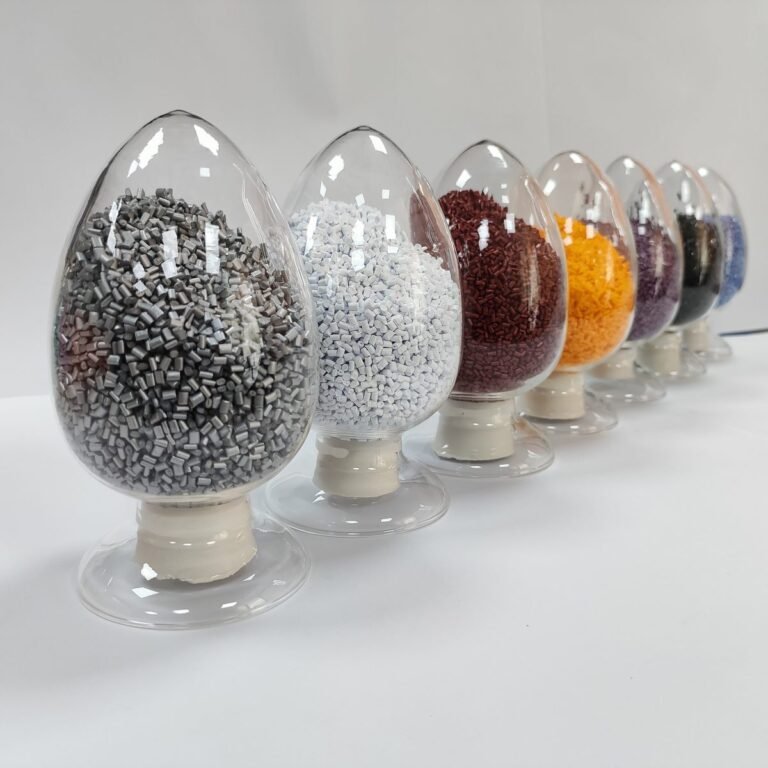
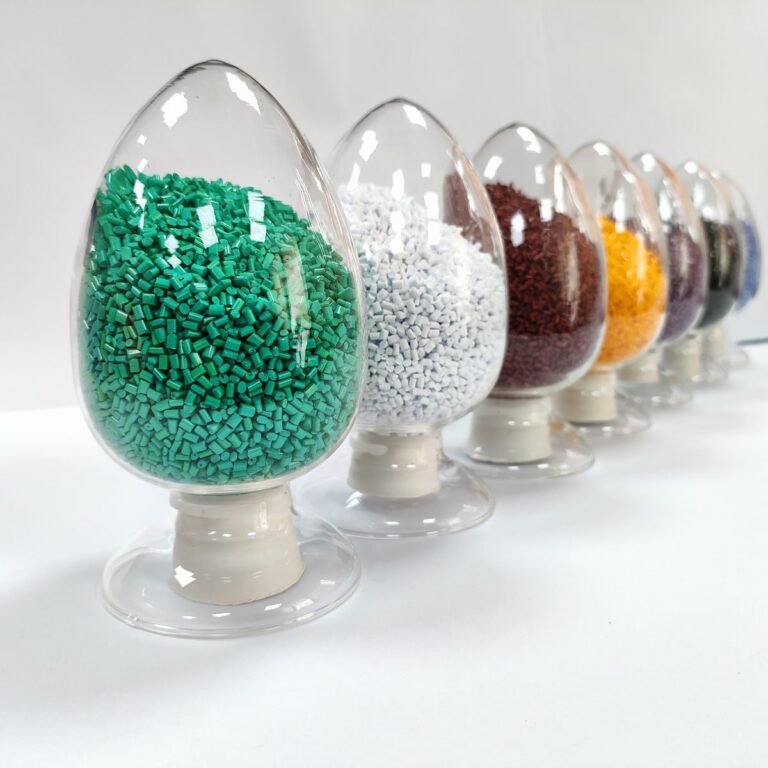
Our own natural-colour modified PPS is a 40% glass-fiber-reinforced, flame-retardant grade. The formulation was optimized for the usual weaknesses of highly glass-filled PPS (low flow, difficult injection moulding and brittleness), combining the strength of glass-fiber reinforcement with good processability. It suits new-energy, automotive-electronics, industrial precision-structure and thin-wall parts.
2. Measured properties (all from test reports)
-
Density 1.643 g/cm³: lighter than metal, for lightweight part design; it lowers part weight and material cost while keeping structural mechanical performance.
-
Melt flow rate 81.0 g/10 min (the main processing advantage): PPS with this much glass fiber usually flows poorly, so thin-wall and complex parts suffer from short shots, surface fiber floating and long cycles. At 81.0 g/10 min this grade flows well for a 40% glass-filled material, fills thin-wall and complex shapes more smoothly, improves part appearance and keeps production cycles stable.
-
Tensile strength 175.0 MPa: stable load-bearing performance; parts under continuous vibration and normal loads stay structurally sound and do not crack easily, suiting load-bearing structural parts.
-
Elongation at break 5.20 %: reduces the brittleness of highly glass-filled material, giving some margin during assembly and light impacts and lowering the risk of chipped edges and cracks in precision parts.
-
Flexural strength 231.0 MPa and flexural modulus 11840.0 MPa: good stiffness and creep resistance; parts under long-term static and dynamic loads resist permanent deformation and keep their dimensions, suiting fixed support structures.
-
Charpy notched impact 10.20 kJ/m² and unnotched impact 38.50 kJ/m²: a balanced combination of stiffness and toughness that eases the brittleness and sharp-corner cracking common in highly glass-reinforced plastics, suiting complex and irregular moulded parts.
-
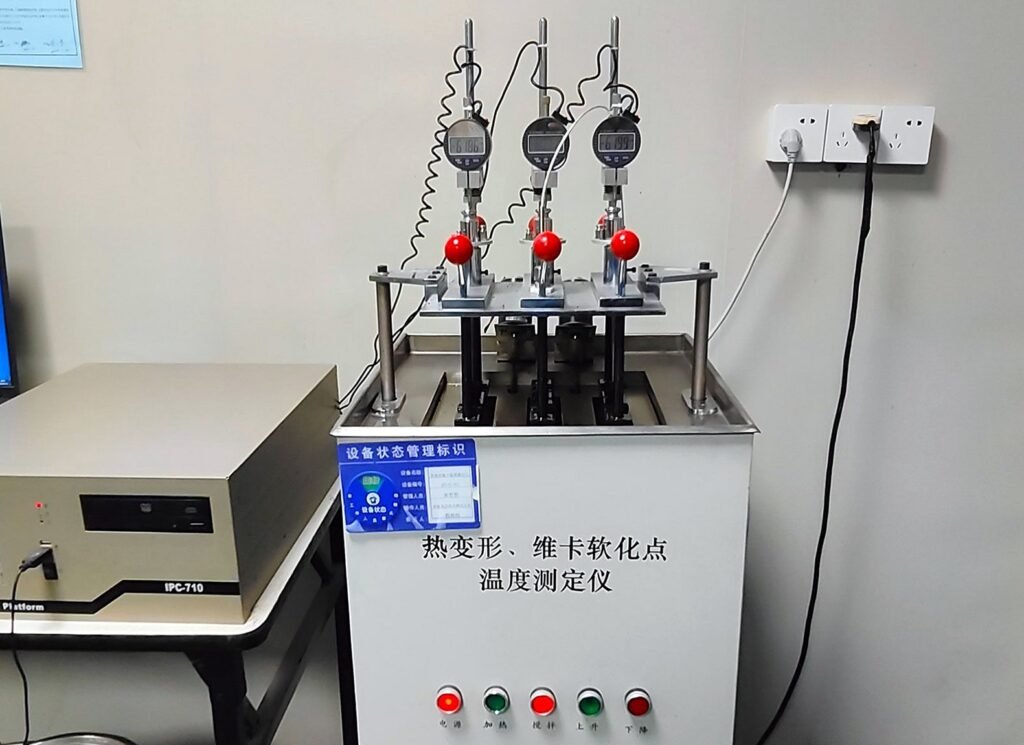
Heat deflection temperature 260 °C at 1.8 MPa, with long-term continuous service at 200-220 °C: more stable at high temperature than common glass-filled PA66 and PBT; parts do not soften or deform easily under load at high temperature, suiting automotive thermal management, engine surroundings and high-temperature pumps and valves.
-
Flammability UL 94 V-0: based on the inherent flame retardancy of PPS, so no large amount of flame-retardant additive is needed and the mechanical properties are kept. It self-extinguishes with no dripping and low smoke, meeting common fire-safety requirements for new-energy, electrical and electronic, and automotive parts.
3. Key features (from the measured data)
-
High glass-fiber content with good flow for complex moulding: a stable 40% glass-fiber content gives strength and stiffness, while the optimized formulation improves melt flow, so complex, thin-wall and irregular parts can be mass-produced.
-
Stable mechanical properties for structural loads: stable tensile, flexural and modulus values give good load-bearing and deformation resistance for most industrial structural parts and automotive components, including as a lightweight replacement for metal.
-
Excellent heat resistance for loaded high-temperature service: a heat deflection temperature of 260 °C under load avoids the softening, deformation and ageing cracks of ordinary PA66 and PBT in long-term high-temperature work.
-
Low water absorption and good dimensional stability: humidity and temperature changes have little effect, so parts do not swell, warp or deform, meeting the tolerances of precision electronic and sensor parts.
-
Stable flame retardancy for safety compliance: V-0 is reached without adding flame retardants at the cost of mechanical properties, for new-energy, high-voltage electrical and electronic, and automotive parts.
-
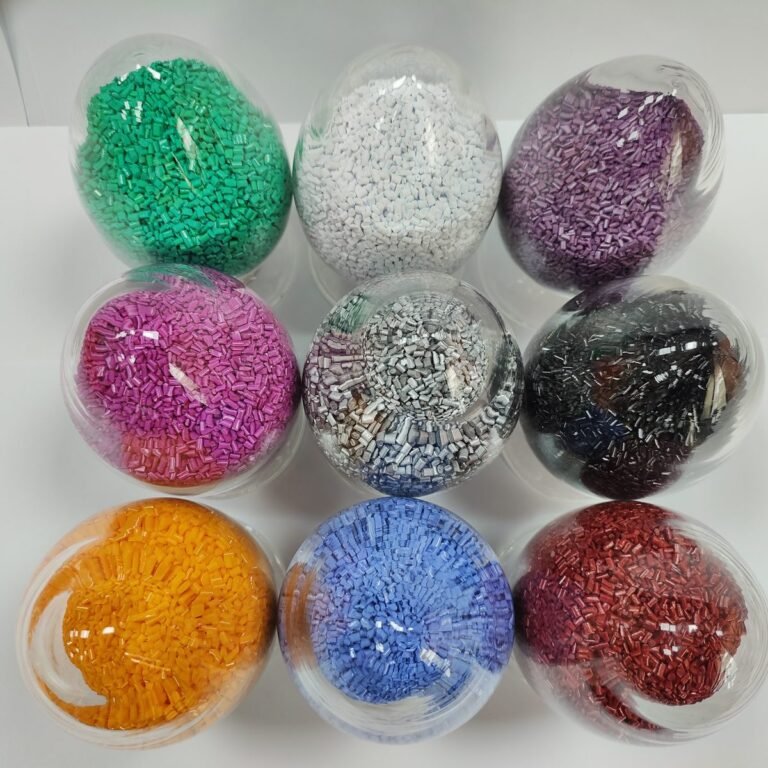
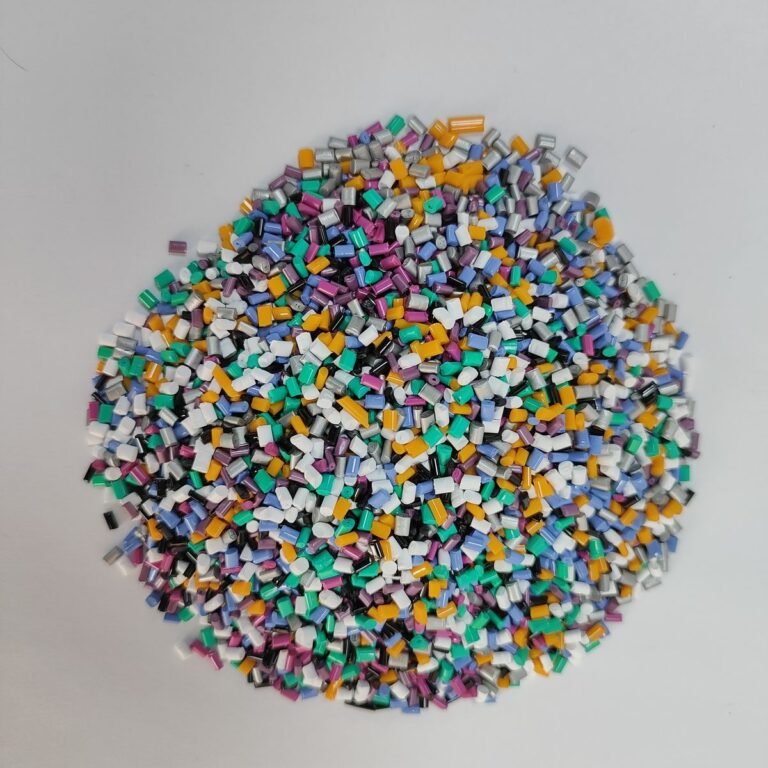
Consistent batches for replacing imported material: the natural colour can be re-coloured on request, glass-fiber content and properties are controlled batch to batch, performance is benchmarked against comparable imported grades, and supply is steady, for replacing imported material and for new projects.
4. Applications
-
New-energy vehicles: electronic water-pump housings and impellers, on-board charger structural parts, battery-module protective brackets, high-voltage connector housings and heat-resistant fixings for electronic control systems. Needs: thin-wall moulding, resistance to coolant immersion, long-term heat resistance and flame retardancy.
-
Conventional automotive parts: sensor housings around the engine, cooling-circuit valve parts, fuel-line brackets, heat-resistant lamp supports and turbo-system heat-shield parts. Needs: stable structural strength, vibration resistance, resistance to engine oil and creep resistance at high temperature.
-
Electrical and electronic precision parts: relay bobbins, circuit-breaker internal parts, high-temperature coil bobbins, terminal blocks and switch bases. Needs: insulation and flame retardancy, precise and stable dimensions, and no deformation or collapse at high temperature.
-
Industrial parts: high-temperature pump and valve parts, oven support brackets, corrosion- and heat-resistant equipment housings and precision industrial fixings. Needs: chemical resistance, long-term heat resistance and stable stiffness.
All properties above come from our own measured data. This natural-colour, 40% glass-fiber, flame-retardant PPS combines high flow, stable mechanical properties, heat resistance, flame retardancy, low water absorption and resistance to corrosion and hydrolysis, solving the common problems of ordinary engineering plastics: insufficient heat resistance, unstable dimensions, hydrolysis and poor processability.
It suits new material selection, upgrades of existing parts and replacement of imported material in most automotive, new-energy, electrical and electronic, and industrial precision parts. We offer sample testing and technical support and can recommend a modified material for your operating conditions. Contact us for the full property report.